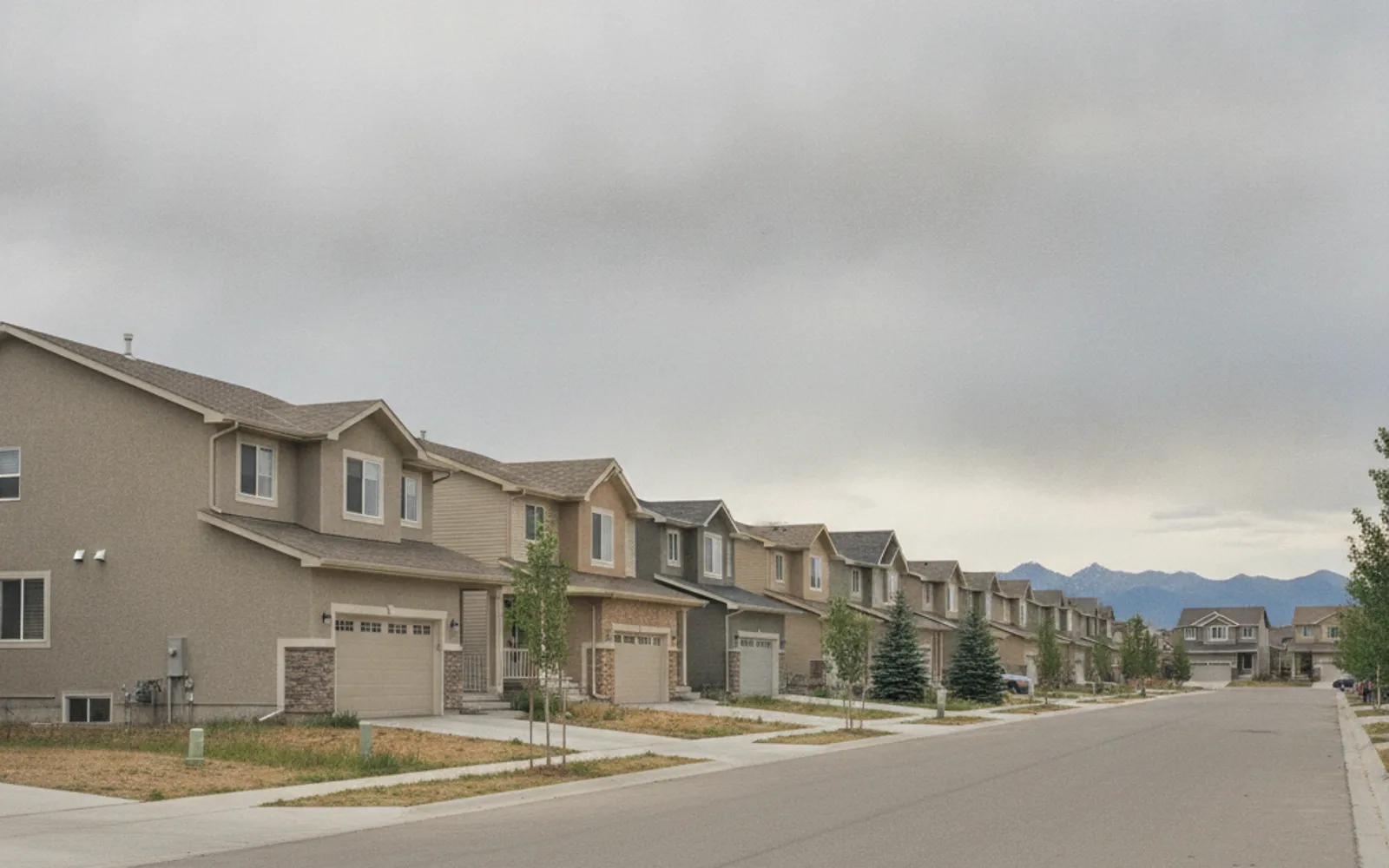
Hail marks, woodpecker holes, cracks and tired parging on northeast stucco homes, from the 1980s and 1990s neighbourhoods to the 2000s suburbs. Call now to be put in touch with an independent Calgary stucco contractor for a no-obligation quote.
Stucco repair in Northeast Calgary usually starts with one of four things: hail marks, woodpecker holes, cracks or bulges around windows, or parging flaking at the base of a wall. The City of Calgary groups its neighbourhoods by era, and the northeast runs from 1980s and 1990s areas such as Castleridge, Falconridge and Martindale to 2000s suburbs such as Saddle Ridge, Skyview Ranch and Taradale. That mix means many stucco walls have been through the better part of two decades of Calgary winters.
Sandstone Stucco Co is advertising paid for by independent Calgary stucco contractors. The site does no repair work itself, holds no trade licence, insurance or warranty, and does not deal with insurers. When you call (403) 555-0148 or email info@sandstonestucco.ca, you are put in touch with an independent contractor, who quotes and contracts directly with you. Start with the stucco repair overview if you want the full picture first.
A contractor can look over the wall, photograph the marks and write a repair estimate you can pass to your insurer. Your policy and your insurer decide what is covered, so call your insurer first.
Northern flicker holes can be patched and reinforced once a hole is empty and nesting is over. The contractor quotes after seeing how many holes there are and how far the damage runs behind the finish.
Cracks around windows, bulges and soft spots can point to moisture behind the finish. As one Calgary firm puts it, nobody can tell the full extent of water damage until the wall is opened up, so the contractor quotes after seeing it.
Flaking or patchy parging at the base of the wall can be patched and recoated. Foundation cracks, waterproofing and structural questions are outside a parging quote.
The City's era labels put Castleridge, Falconridge and Martindale in the 1980s and 1990s group, and Abbeydale, Coral Springs, Cornerstone, Monterey Park, Redstone, Saddle Ridge, Skyview Ranch and Taradale in the 2000s group. By the City's 2021 figures, 50% of dwellings in Saddle Ridge (24,365 people) and 68% of dwellings in Taradale (17,630 people) were built between 2001 and 2010.
That does not mean a wall is failing. It does mean the details are worth checking: the caulking where stucco meets window frames, the lowest part of the wall where snow piles up, and the gutters, eaves and flashing above. Martini Stone Masonry says snow piled against stucco softens and crumbles the lowest 12 to 18 inches of a wall, and Calgary Parging reports that over 30% of its own residential repairs address water damage from incorrectly installed gutters, eaves or flashing. Those are each firm's own job figures, not city-wide numbers.
Calgary's weather is part of the picture. In 2022 the city had 117 freeze-thaw cycles against a 30-year average of 128, and 54 chinook days against an average of 46, and the City notes that moisture and snow can cause stucco to shrink and crack. The New Home Buyer Protection Act covers homes built under a permit applied for on or after 1 February 2014, so it does not reach 2000s builds. If your home is newer than that, check your new home warranty before paying for repairs.
Environment and Climate Change Canada says a hail core scraped over northeastern Calgary in the storm of 13 June 2020, and that the 5 August 2024 storm hit parts of the city's northeastern quadrant. The Insurance Bureau of Canada says the 2024 storm primarily affected northern parts of the city and produced more than 130,000 insurance claims. The City of Calgary is clear, though, that all communities in Calgary are equally exposed to hail, so a northeast address is not a reason to expect more damage than anywhere else.
The City says stucco is fire resistant and holds up well to flying debris in moderate wind and hail, but severe storms can cause damage. Martini Stone Masonry describes hail leaving 2 to 5 mm indentations that break the moisture barrier. Whether marks on your wall are storm damage, old wear or both is something an on-site look can sort out.
If you think hail hit your home, IBC's steps are to document the damage with photos, call your insurer or its claims department to report it, keep receipts and keep detailed notes. The City asks owners to contact their home insurance provider before any repair work. A contractor can give you a written repair estimate to pass to your insurer, but this site does not file, handle or negotiate claims, and whether stucco damage is covered depends on your own policy. More in hail and woodpecker stucco damage.
Northern flickers are protected under the federal Migratory Birds Convention Act, and the Migratory Birds Regulations, 2022 forbid harming one or disturbing a nest or eggs without a permit. An empty hole, with no live bird or viable egg in it, may be repaired without a permit. The Regulations allow non-harmful scaring, and Environment and Climate Change Canada says access can be covered with a tarp or wire mesh as long as the bird is not disturbed or harmed. Repair after nesting ends. Calgary Parging says flickers work Calgary stucco hard, especially on west and south elevations in spring.
Timing matters. Imasco's guidance is no stucco work when air and substrate temperatures are below 4°C for 24 hours before, during and after application, and Calgary Parging says stucco cures best above 5°C in dry conditions, typically April through October, with off-season repairs needing heated hoarding. In winter the useful jobs are photographing the damage, calling your insurer and lining up written estimates for spring.
Foundation parging is the cement coat over the concrete at the base of the wall, where winter snow tends to pile. A contractor can patch and recoat flaking or patchy parging, and Calgary Parging lists a recoat of one side of a house at $975 to $1,700 before GST. Cracks that keep growing, or that run through the foundation wall itself, are outside a parging quote and are a question for a qualified professional. More in parging in Calgary.
No. The City of Calgary says all communities within Calgary are equally exposed to hail. Environment and Climate Change Canada reports that the 2020 hail core scraped over northeastern Calgary and that the 2024 storm hit parts of the northeastern quadrant, but that describes what those storms did, not a lasting difference. If you see marks on your stucco, photograph them and call your insurer.
The New Home Buyer Protection Act applies to homes built under a building permit applied for on or after 1 February 2014, and homes built in the 2000s were permitted before that date. If your home is newer than that, check your new home warranty before paying for repairs. Hail damage is not a building defect, so do not expect a warranty to cover it.
An empty hole, with no live bird or viable egg, may be repaired without a permit. If a flicker is nesting, disturbing the nest or eggs without a permit is forbidden, so leave it alone until nesting ends. After that, covering the area with wire mesh can discourage the bird from coming back. Imasco's guidance also rules out stucco work below 4°C, so in cold weather the repair itself usually waits. A contractor quotes after seeing the holes.
No price list specific to northeast Calgary has been published that this page can cite. Calgary Parging lists small patch repairs at $550 to $1,125 and bulge repair at $1,450 to $3,000, both before GST (5%). Other firms publish different figures, so treat each as one firm's number, not a Calgary average; the contractor quotes after seeing the wall. See stucco repair cost in Calgary.
No-obligation quotes from independent Calgary stucco contractors.